Building Communication at Home: Small Habits That Add Up
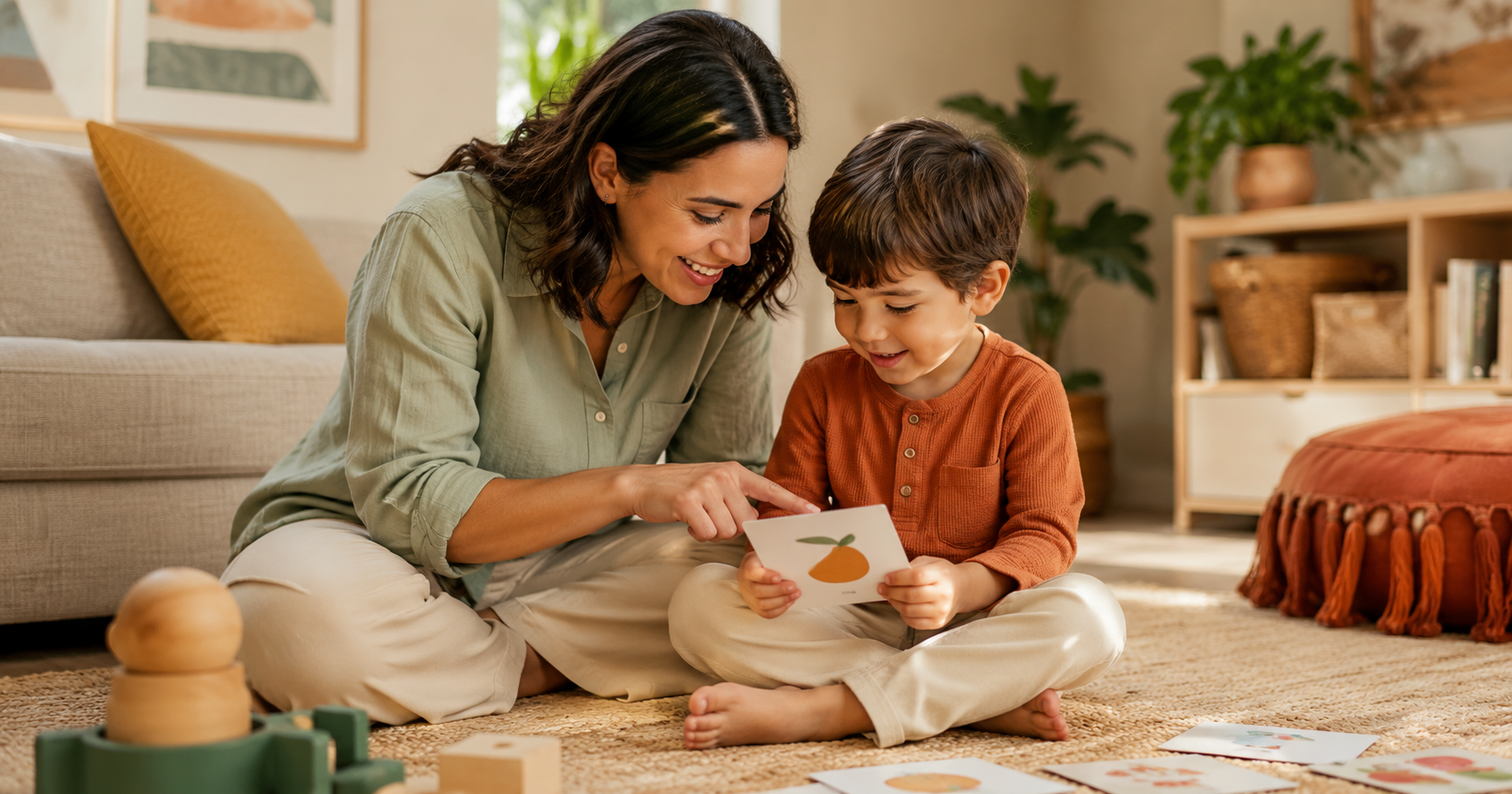
You don’t need a therapy session to build communication. Some of the most effective moments happen in ordinary parts of the day, folding laundry, making a snack, driving to school, and a handful of small, consistent habits can make a real difference over time, without turning every interaction into a lesson.
Narrate Instead of Quizzing
Instead of constantly asking “what’s this? what color is it?”, try simply naming things as you go: “Look, a red ball. The ball is rolling.” Constant questioning can feel like pressure to a child who’s already working hard to communicate. Narration models language without demanding a response.
Why Narration Works
Narrating gives your child repeated, low-pressure exposure to vocabulary and sentence structure without putting them on the spot. Over time, that exposure tends to show up in their own spontaneous language, often unexpectedly, in a phrase you didn’t realize they’d picked up.
Pause and Wait
After you ask something or hand your child a choice, count to five in your head before jumping in to help. That pause gives them room to process and respond, even if it feels like a long silence at first.
The “Expectant Pause”
Therapists sometimes call this the expectant pause: leaning in slightly, looking interested, and simply waiting. It signals “I’m listening and I believe you can answer” without adding verbal pressure. It can feel unnatural at first, especially in a busy household, but it’s one of the simplest changes with an outsized impact.
Follow Their Lead
If your child is fascinated by the vacuum cleaner or lining up cars, join them there instead of redirecting to something else. Communication tends to grow fastest around things a child is already motivated by.
Communication Through Play
Play is one of the richest, lowest-pressure environments for building language, because your child is already engaged and motivated. You don’t need special toys or curriculum. Simple pretend play, a stuffed animal “asking” for a turn, a toy car that “wants” to go faster, gives your child natural opportunities to request, comment, and respond within a context that already feels fun rather than instructional.
Building in Communication Temptations
A useful trick is creating small, harmless obstacles on purpose: putting a favorite snack somewhere visible but out of reach, giving only one puzzle piece at a time, or “forgetting” to give a spoon with a bowl of cereal. These moments create a natural reason to communicate, without any pressure or a formal request.
Using AAC and Visual Supports at Home
If your child uses an AAC device, picture exchange system, or other visual support, consistency at home matters just as much as consistency in session. Keep the system accessible and modeled throughout the day, not reserved only for “teaching moments.” Point to icons yourself as you talk, even if your child isn’t actively using the device in that exact instant. This kind of modeling, without demanding a response, builds familiarity the same way hearing spoken language builds familiarity for any child.
Offer Choices, Not Open Questions
“Do you want the blue cup or the green cup?” is often easier to answer than “what do you want to drink?” Two clear options lower the demand while still building expressive language and a sense of control.
Celebrate Attempts, Not Just Success
If your child reaches for something and makes any sound or gesture at all, respond to it like it counted, because it did. Communication is built through thousands of small, low-stakes repetitions, not big breakthrough moments.
What “Celebrating” Actually Looks Like
This doesn’t need to be a big production. A warm smile, an immediate response, and giving them what they were reaching or gesturing for is often the most powerful reinforcement there is.
Key Takeaways
- Narrating instead of quizzing gives your child language exposure without pressure.
- Pausing after a question or choice, even for just a few seconds, gives real processing time.
- Following your child’s interests builds motivation into communication naturally.
- Consistency with AAC or visual supports at home matters as much as consistency in session.
- Small, honest responses to any communication attempt reinforce it far more than waiting for a perfect one.
Frequently Asked Questions
Not at all, this is a completely normal and expected starting point. Requesting (asking for wants and needs) is often one of the earliest communication skills to develop, and other functions like commenting or asking questions typically build from there.
Not always, and not as a hard rule. Requiring a “perfect” response before honoring a request can create frustration and actually reduce communication attempts over time. Your therapist can help you find the right balance for your child’s current level.
This is a conversation to have directly with your ABA team or a speech-language pathologist, since it depends on your child’s specific communication profile. AAC can be introduced alongside spoken language and does not prevent or delay speech development, a common misconception.
Some apps and tools can be genuinely helpful, especially AAC apps recommended by a professional. As a general rule, interactive, adult-supported use tends to build communication skills more effectively than passive screen time alone.