
What to Expect at Your Child's First IEP Meeting
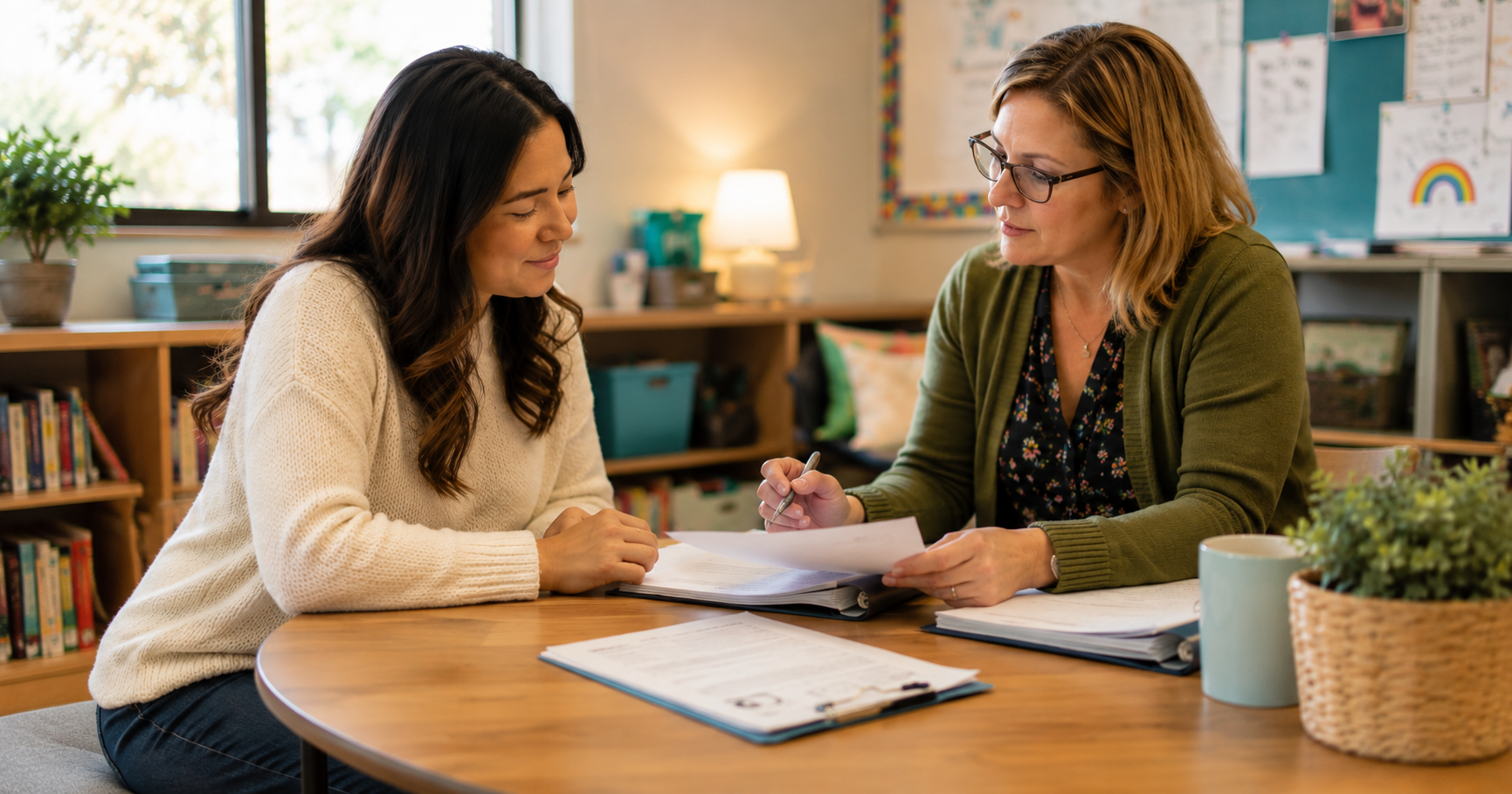
Your first IEP meeting can feel intimidating: a room full of professionals, a stack of paperwork, and a lot of acronyms flying by faster than you can write them down. Here’s what’s actually happening, and how to walk in feeling prepared instead of blindsided.
What an IEP Actually Is
An IEP, or Individualized Education Program, is a legal document outlining the specific supports, goals, and services your child will receive at school. The meeting itself is where the team, usually a special education teacher, a general education teacher, a school psychologist or administrator, and you, comes together to build or review that plan.
Common IEP Terms Decoded
Walking in with a working knowledge of a few key terms can make the meeting feel far less overwhelming.
FAPE (Free Appropriate Public Education)
The legal guarantee that your child is entitled to an education tailored to their needs, at no cost to you, in the public school system.
LRE (Least Restrictive Environment)
The requirement that your child be educated alongside non-disabled peers to the greatest extent appropriate, rather than automatically placed in a separate setting.
Present Levels
A section of the IEP describing your child’s current academic and functional performance, essentially the starting point that all the year’s goals are built from.
Related Services
Additional supports beyond the classroom, such as speech therapy, occupational therapy, or counseling, that the school may provide as part of the IEP.
How to Prepare Beforehand
Write Down Your Own Goals and Concerns
You don’t have to speak the school’s technical vocabulary to advocate well. “I want him to be able to ask for a break when he’s overwhelmed” is a completely valid goal to bring to the table, in exactly those words.
Gather Outside Input
If your child works with an ABA therapist, pediatrician, or other outside provider, ask if they can provide a brief written summary of relevant progress or recommendations ahead of the meeting. Outside documentation often carries real weight in these discussions and can help translate what you’re seeing at home into language the school team recognizes.
During the Meeting
You’re Allowed to Ask Questions
This is a collaborative meeting, not a decision that happens to you. If a term is unfamiliar or a recommendation doesn’t make sense, ask. There’s no such thing as a question you’re not allowed to ask about your own child.
You’re Allowed to Disagree
If something doesn’t sit right, it’s okay to say “I need some time to think about this” instead of signing on the spot. An IEP is a living document, not a one-time decision made under pressure, and you’re never required to agree in the room.
Consider Bringing Support
Many parents bring a spouse, a family member, or their child’s therapist, with the school’s coordination, to the meeting. An extra set of ears, and an extra advocate, can make a real difference in how the meeting goes and what you remember afterward.
After the Meeting: What Happens Next
Once the IEP is finalized, the school is legally required to implement it as written. You’ll typically receive a copy of the document, and it’s worth keeping it somewhere accessible, you may find yourself referencing specific goals or accommodations throughout the year, especially if something isn’t being followed as written.
Progress Reports and Check-Ins
Schools are required to report on your child’s progress toward IEP goals at regular intervals, often alongside standard report cards. If you’re not seeing these updates, it’s completely appropriate to ask for them directly.
Remember: This Is a Starting Point
An IEP isn’t permanent or unchangeable. It’s reviewed regularly, and it can be revised as your child grows and their needs shift. This first meeting is the beginning of an ongoing conversation, not the final word on what your child needs.
Key Takeaways
- An IEP is a legal document, and the school is required to implement it exactly as written.
- Learning a few key terms (FAPE, LRE, Present Levels, Related Services) makes the meeting far easier to follow.
- Outside documentation from your ABA therapist or other providers can meaningfully strengthen your case.
- You can always ask questions, request time before signing, and bring support with you.
– Progress toward IEP goals should be reported to you regularly, ask if you’re not receiving updates.
Frequently Asked Questions
No. You can request time to review it at home before signing, and you’re allowed to disagree with specific parts of the plan even after signing others.
You have the right to request an independent educational evaluation, ask for mediation, or, in some cases, pursue formal dispute resolution. Starting with a direct, calm conversation with the team is usually the first and most effective step.
By law, IEPs must be formally reviewed at least once a year, though you can request a meeting sooner if you believe your child’s needs have changed.
Often, yes, with advance coordination with the school. Even if they can’t attend in person, a written summary or letter from your therapist can be submitted as part of the record.